
The Best Tourniquets for Church Safety: 4 We Trust (and 1 We Don’t)
Article Summary
When it comes to protecting your congregation, carrying the right medical gear is just as important as other safety measures. In this article about tourniquets for church safety, we’ll cover four tourniquets we recommend, highlighting their strengths and how they perform under stress. Each one is trusted, effective, and recognized by the Committee on Tactical Combat Casualty Care (CoTCCC).
If you’re part of a church safety team, you already know emergencies can happen without warning. While most people think about fire extinguishers or security drills, life-saving medical gear deserves just as much attention. Bleeding control is one of the most important areas to prepare for. Having the right tools on hand makes all the difference, which is why we’re talking about tourniquets for church safety.
Tourniquets are simple devices, but the wrong one or the wrong training can mean the difference between life and death. Below are four we trust, use in training, and recommend for anyone serious about protecting their church community.
Why is the CAT Tourniquet So Widely Used?
The Combat Application Tourniquet (CAT) is by far the most common tourniquet you’ll see in the field. It has earned its place because it is easy to carry, proven under stress, and reliable in both military and civilian settings.
One of the biggest reasons we recommend the CAT for church safety is its ease of use. It is straightforward to apply, including when you need to put it on yourself with one hand. That makes it ideal for training because if someone learns to apply the CAT correctly, they can adapt to almost any other tourniquet on the market.
We also use the CAT in almost every training scenario because it is the standard. The more your team trains with the tourniquet they’re most likely to encounter in an actual emergency, the better prepared they will be.
What Makes the SOFTT-W a Strong Choice?
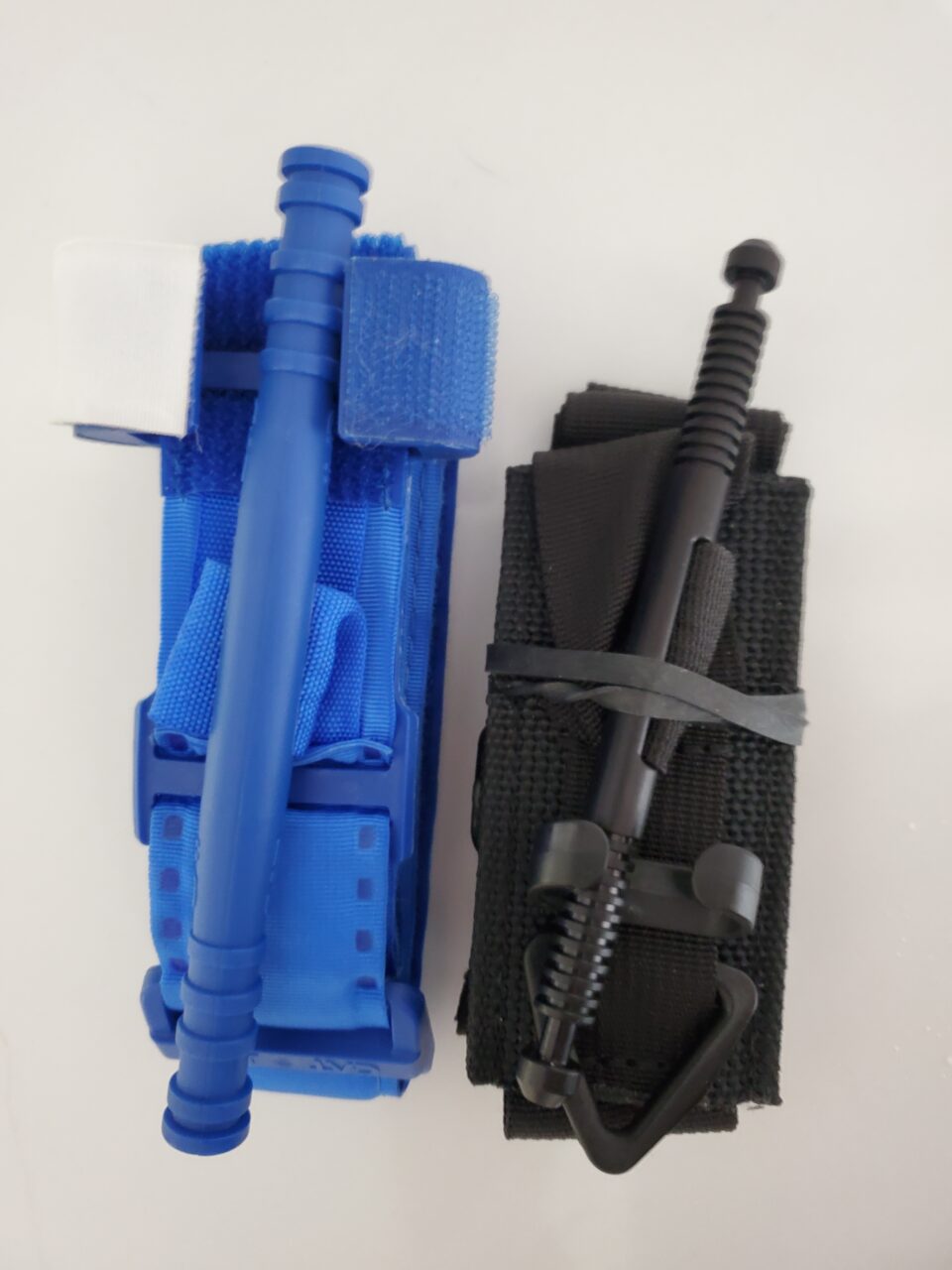
The SOFTT-W (Special Operations Forces Tactical Tourniquet – Wide) is another CoTCCC-recommended tourniquet and one we carry often. While it is slightly bulkier in some setups, it brings important advantages.
- It folds smaller than you might expect, making it easier to tuck into a pocket or pouch.
- Its buckle design lets you detach and reattach the strap quickly, which can make application faster in tight spots.
- The wide strap works well on larger limbs and helps reduce tissue damage while stopping bleeding.
We’ve found the SOFTT-W to be a dependable option that works well across different situations. While the CAT edges it out for self-application, the SOFTT-W stands out for strength and versatility. This is my preferred TQ when I use an ankle medical kit or for daily carry.
Why I Choose the SOFTT-W Tourniquet over the CAT
Is the SAM XT Really That Easy to Use?
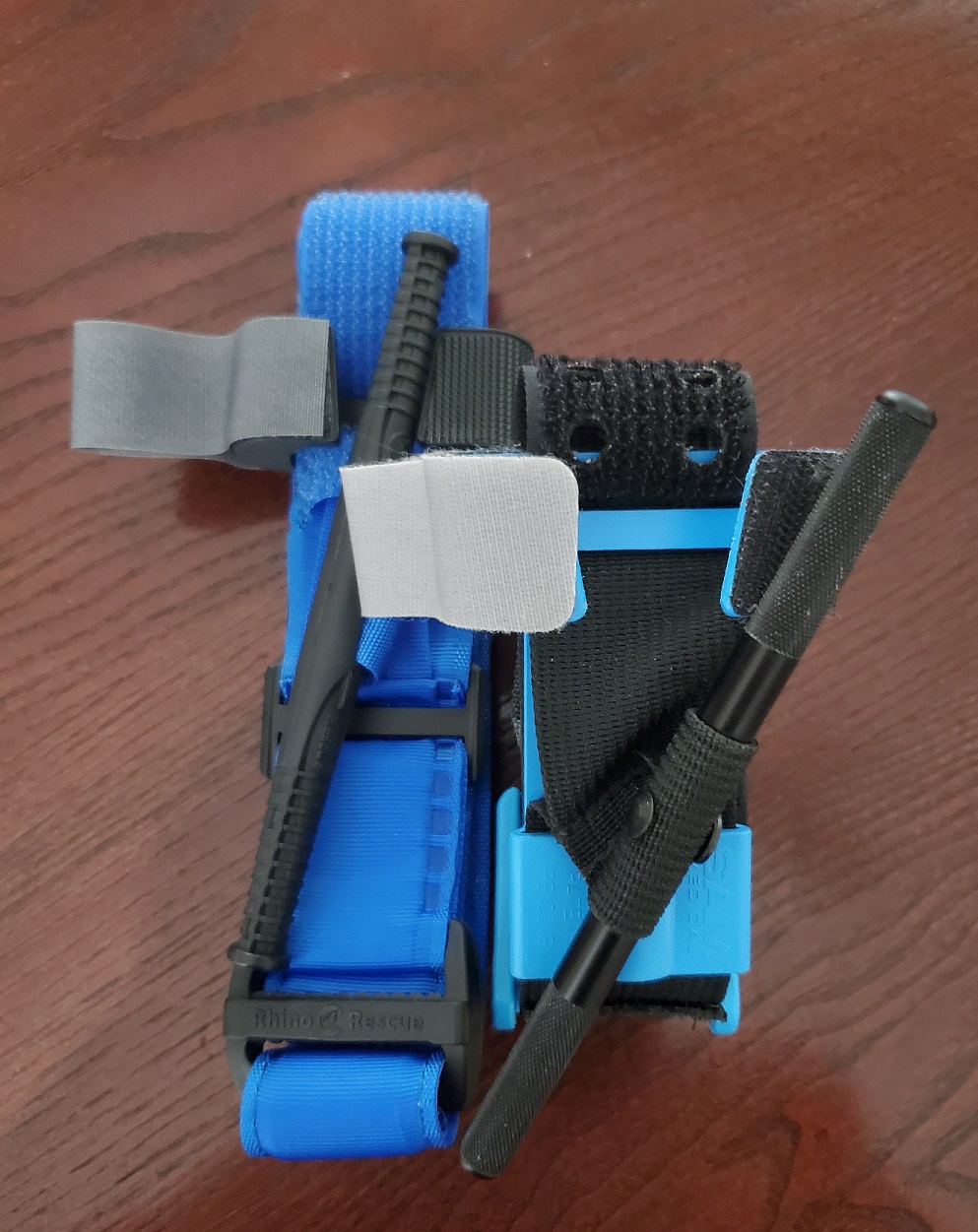
The SAM XT is often described as the easiest tourniquet to apply, and in many cases, that is true. Its unique “pull-to-click” design makes it feel almost automatic, especially under stress. Once you pull the strap tight and hear the click, you know it’s locked into place.
Another strength is its sturdy build. The SAM XT uses durable materials and gives confidence the moment you handle it. Many safety team members who try it for the first time are surprised at how quickly they can apply it, even without much practice.
The only downside is that it is a little bulkier to carry compared to the CAT or SOFTT-W. Still, if your priority is ease of use, the SAM XT is a smart choice.
Easiest Tourniquet to Use: The SAM XT
How Does the Tactical Mechanical Tourniquet Compare?

The Tactical Mechanical Tourniquet (TMT) was added to the CoTCCC recommendation list in 2019. It is a well-constructed tourniquet that uses a wide 2-inch band to spread pressure and reduce tissue damage. In testing, it has performed well and feels solid in the hand.
There are a couple of considerations with the TMT. Its retention clip only locks from one direction, which can make one-handed self-application more challenging. It also doesn’t cinch down as small as a CAT, so it may not be the best option for children or very small limbs.
That said, for adult use and with proper training, the TMT is reliable. Some church safety teams prefer it because of the slightly wider strap. While we lean toward the CAT and SOFTT-W for most training scenarios, the TMT remains a good tool in the right hands.
Real User Results: Tactical Mechanical Tourniquet
We Don’t Recommend the R.A.T.S. Tourniquet
One tourniquet that often comes up is the RATS (Rapid Application Tourniquet System). Marketing for the product says it’s “the fastest tourniquet on the market and proven in combat.”. The problem is, they link to a study from Cambridge University as evidence. That study showed the RATS took an average of 11.1 seconds, while the CAT took an average of 10.4 seconds. Math isn’t my strong suit, but that doesn’t seem like the fastest.
You may be saying, ‘That’s pretty close, ’ but that leads us to another issue we have with RATS. I’ve mentioned the CoTCCC (often referred to as TCCC) several times in this article. That is the military committee that studies these items and their efficacy. Rapid Medical, the company that makes the RATS applied for a trademark for Tactical Combat Casualty Care (TCCC). Then they started marketing the RATS as “TCCC Approved”. After they got called out on it, they stopped, but not before duping consumers into thinking this was a real endorsement. To me, that is unethical and not something I can support.
As for the actual use, some people claim the RATS is “intuitive” and fast. Having taught Stop the Bleed classes to hundreds of people, I don’t believe these claims. Being able to wrap fast and being able to wrap effectively are not the same thing. And the price isn’t any lower than I’ve found CAT TQs on sale. Its only real ‘advantage’ is that it can be carried easily. Some users put it around their waist, under their belt. It may be slightly better than improvising a tourniquet, but not by much. We do not recommend using it.
Watch Out for Counterfeit Tourniquets
One more danger we have to mention is fake tourniquets. Counterfeit versions of the CAT, SOFTT-W, and other CoTCCC-recommended models are sold online, often at a fraction of the real price. They may look the same, but the materials and construction are unreliable. In testing, fakes have broken under stress or failed to stop bleeding. A counterfeit is worse than carrying nothing because it gives a false sense of security. Always buy from trusted distributors and verify you’re getting genuine gear. Lives depend on it. Read more about it here. Anything we link to in this article is trustworthy. Rescue Essentials is our first choice when we shop for tourniquets.
What Should a Church Safety Team Do?
Choosing between these four tourniquets comes down to training, personal preference, and how you plan to carry them. The most important thing is not which brand you choose but that you actually carry one and know how to use it.
If you’re building or strengthening your church safety program:
- Equip your team with CoTCCC-recommended tourniquets.
- Train consistently, especially with the CAT, since it is the most common.
- Make sure every member knows how to apply one to themselves and others under stress.
Tourniquets save lives. In a church environment where medical help may take time to arrive, having one ready could mean the difference between life and death.
Key Takeaways
- The CAT is the most common tourniquet and the one we recommend training with first.
- The SOFTT-W offers strength and versatility, especially for larger limbs.
- The SAM XT stands out for its pull-to-click ease of use.
- The TMT is reliable but has some limits in self-application and smaller limb use.
- The RATS tourniquet is not recommended in any of our training.
- For church safety teams, carrying a tourniquet and training to use it is what matters most.
Notice: We do use affiliate links and may earn a commission on sales if you use them.